
Labradoodle vs Goldendoodle: Which Breed Is the Better Fit?
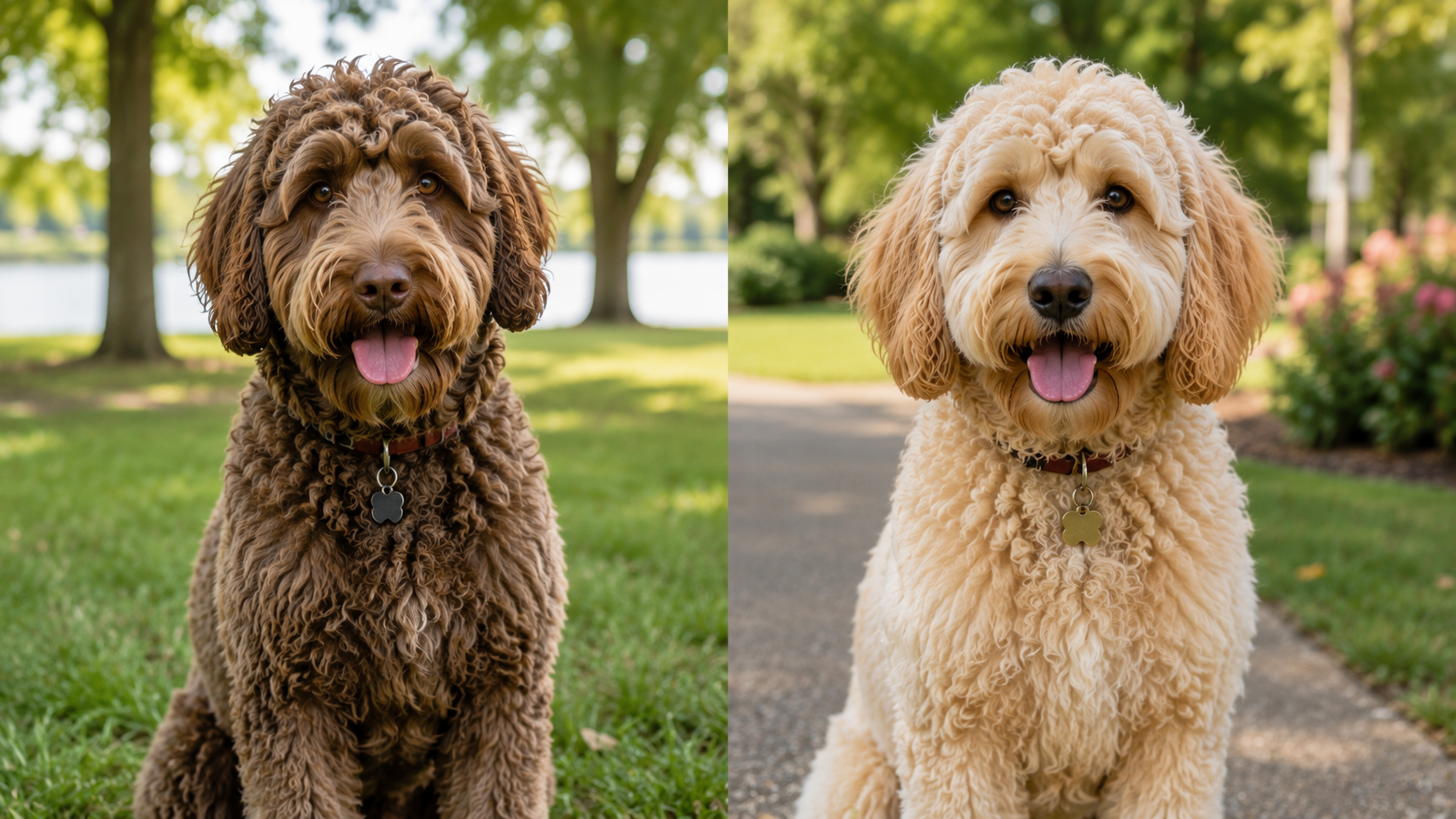
The Labradoodle and the Goldendoodle are the two most popular Poodle crosses in the world, and they are frequently discussed as though they are essentially the same dog. Both combine a Poodle parent with a beloved retriever breed. Both aim for low-shedding coats with friendly, trainable temperaments. Both come in multiple sizes and coat types. On the surface, the differences can seem minimal.
In practice, the differences are real and matter for specific households and lifestyles. The choice between a Labradoodle and a Goldendoodle is not simply a preference between two interchangeable options. It is a question of which combination of temperament traits, energy profile, coat characteristics, and size best suits your home, your family composition, and your daily life.
Quick Answer: Labradoodles, which cross a Labrador Retriever with a Poodle, tend to have a slightly more athletic, higher-energy, and sometimes more independent temperament than Goldendoodles. Goldendoodles, which cross a Golden Retriever with a Poodle, are typically described as softer, more emotionally sensitive, and extremely sociable. Both are excellent family dogs with low-shedding potential when appropriately bred, but they suit slightly different households depending on activity level, children's ages, and tolerance for an emotionally demanding dog.
Temperament: The Core Difference
The temperament difference between Labradoodles and Goldendoodles flows directly from the difference between Labrador Retrievers and Golden Retrievers. Labradors are athletic working dogs with a more independent streak, higher physical drive, and a tendency toward exuberant physical expression. They are enthusiastic, often boisterous, and confident. Golden Retrievers are known for their soft, sensitive, emotionally attuned nature: they are people-focused to a degree that can border on velcro dog territory, deeply social, and generally more emotionally reactive.
These characteristics carry through to the crosses. Labradoodles often have more of a working dog edge: they are enthusiastic, may require more physical output to be settled, and can be more independently minded. Goldendoodles tend to be softer in their responses, more visibly affected by their owner's emotional state, and more consistently eager for close physical contact. Neither is better: each suits a different type of owner.
Energy Level and Exercise Needs
Both breeds need significant daily exercise, but the expression of that energy differs. Labradoodles often have more of a sporting dog's sustained drive: they can run for longer, retrieve obsessively, and remain mentally alert through extended activity. Goldendoodles match this energy but may be satisfied with slightly less intensity and are often more content with a moderate walk followed by indoor play. For very active households who run, hike, or want a sporting companion, the Labradoodle's slightly higher drive may be a better match. For a family wanting a highly affectionate companion who is also happy to cuddle on the sofa after a good walk, the Goldendoodle's profile often suits better. In both cases, adequate exercise needs must be met daily or either breed will find less desirable outlets for their energy.
Coat Type and Grooming
Both breeds inherit a range of coat types depending on the generation of the cross and the specific genetics of the parent dogs. Wavy to curly fleece coats appear in both, with tighter wool coats in higher Poodle-content generations. The key difference is subtle: Goldendoodle coats tend to have a slightly softer texture, sometimes described as silkier, reflecting the Golden Retriever's famously soft coat genetics. Labradoodle coats can be slightly coarser, reflecting the Labrador's denser coat.
Both coat types require similar maintenance: regular brushing to prevent matting, professional grooming every six to twelve weeks depending on coat type and length. Neither is dramatically easier to groom than the other, though individual variation within each breed means some dogs of both types need more attention than others.
The practical guidance for grooming at home applies equally to both breeds: line brushing from the skin outward, regular attention to the high-friction areas behind the ears and under the armpits, and professional appointments timed to coat growth rather than a fixed calendar.
Suitability for Families With Children
Both Labradoodles and Goldendoodles are popular family dogs for good reason: both are typically gentle, playful, and highly sociable with children. The distinction is in the style of that interaction. Labradoodles can be exuberantly physical with children, particularly as puppies, which may require more active management around very young children or those who are nervous around dogs. Goldendoodles are often described as more gently attuned to the emotional state of a child, which can make them more self-regulating in their physical interactions.
For families with very young children who need a dog that is physically gentle from the start, the Goldendoodle's softer disposition is often the better match. For families with older children who want an active, boisterous dog that keeps up with an energetic household, the Labradoodle's athletic enthusiasm is frequently described as a perfect fit.
Sensitivity and Emotional Demands
One dimension that prospective owners sometimes underestimate is the difference in emotional sensitivity between the two breeds. Goldendoodles are highly emotionally reactive dogs: they pick up on the emotional state of their family and respond to it, they dislike conflict or tension in the home, and they can develop separation anxiety more readily than dogs with a more independent temperament. This emotional attunement is part of what makes them so beloved, but it also means they need an emotionally stable environment and cannot be left alone for very long periods without appropriate preparation.
Labradoodles are social and affectionate but can be somewhat more resilient to being left alone, more tolerant of a busy or variable household dynamic, and less prone to the emotional hypersensitivity that some Goldendoodles display. For a household where someone works full time and the dog will be alone for portions of the day, this difference may be relevant.
Which Dog Suits Which Household
Rather than declaring one breed universally better, the most useful question is which profile matches your specific circumstances. Consider the following:
● Active household, older children, someone who works from home or has dog company: either breed suits, with the Labradoodle being the better match for very high activity levels.
● Family with very young children wanting a gentle, emotionally attuned dog: the Goldendoodle's softer disposition is often the better fit.
● Someone who is away from home for extended periods: the Labradoodle's slight independence advantage may make alone time easier to manage, though neither breed does well with very long isolation.
● Someone who values a soft, cuddly, people-focused dog above all else: the Goldendoodle is almost universally described this way by their owners.
● Someone wanting a more athletic companion for running, hiking, or active sport: the Labradoodle's working dog heritage often makes them the stronger choice.
Whichever breed you choose, socialisation in the critical early window and consistent training from puppyhood are the factors that shape how the dog's temperament actually expresses itself day to day, regardless of the breed tendencies they started with.
The guidance on raising your doodle puppy applies equally to both breeds: the foundations of a well-adjusted adult dog are established in the first weeks and months, and they are more about what the owner does than about which cross the puppy happens to be.
Frequently Asked Questions
Are Labradoodles or Goldendoodles smarter?
Both are highly intelligent dogs inheriting Poodle intelligence alongside the trainability of the retriever parent. Practical intelligence differences between individuals within either breed are more significant than any average difference between the breeds. Both respond very well to positive reinforcement training.
Which sheds less, a Labradoodle or a Goldendoodle?
Shedding is more a function of generation and coat type than breed. A curly F1B Labradoodle and a curly F1B Goldendoodle will shed comparably little. A wavy F1 of either breed will shed somewhat more. Within the same generation and coat type, the difference in shedding between the two breeds is minimal.
Which is easier to train?
Both are among the more trainable dog breeds available. Goldendoodles may be marginally more eager to please in a way that makes them highly responsive in basic obedience training. Labradoodles are equally trainable but can have a slightly more independent streak that requires a more engaged, consistent trainer. Neither is difficult for an owner willing to invest in consistent positive training.
Which is better for people with dog allergies?
Neither breed is truly hypoallergenic, and allergy response is individual. Both breeds in their higher Poodle-content generations (F1B and above) produce less shedding and therefore distribute fewer allergens. Spending time with the specific dog or its parents before committing is the only reliable way for a person with allergies to assess their individual response.
Can Labradoodles and Goldendoodles live together?
Yes, and many households have both. Both breeds are sociable and typically get along well with other dogs of compatible energy levels. The main considerations are ensuring each dog gets adequate individual attention, training, and exercise, and that the combined energy level of two active doodle dogs is manageable for the household.
The Bottom Line
Labradoodles and Goldendoodles are both wonderful dogs whose similarities are greater than their differences. Where the differences do matter is in households where the specific combination of energy level, emotional sensitivity, and sociability profile makes one genuinely more compatible than the other. Understanding those distinctions is what makes the choice an informed one rather than a coin toss.
All About The Doodles covers both Labradoodles and doodle breeds broadly, with practical guidance on everything from breed selection through adult care. Browse the articles section for help at every stage of the doodle journey.