
How to Puppy-Proof Your Home Before Bringing a Labradoodle Home
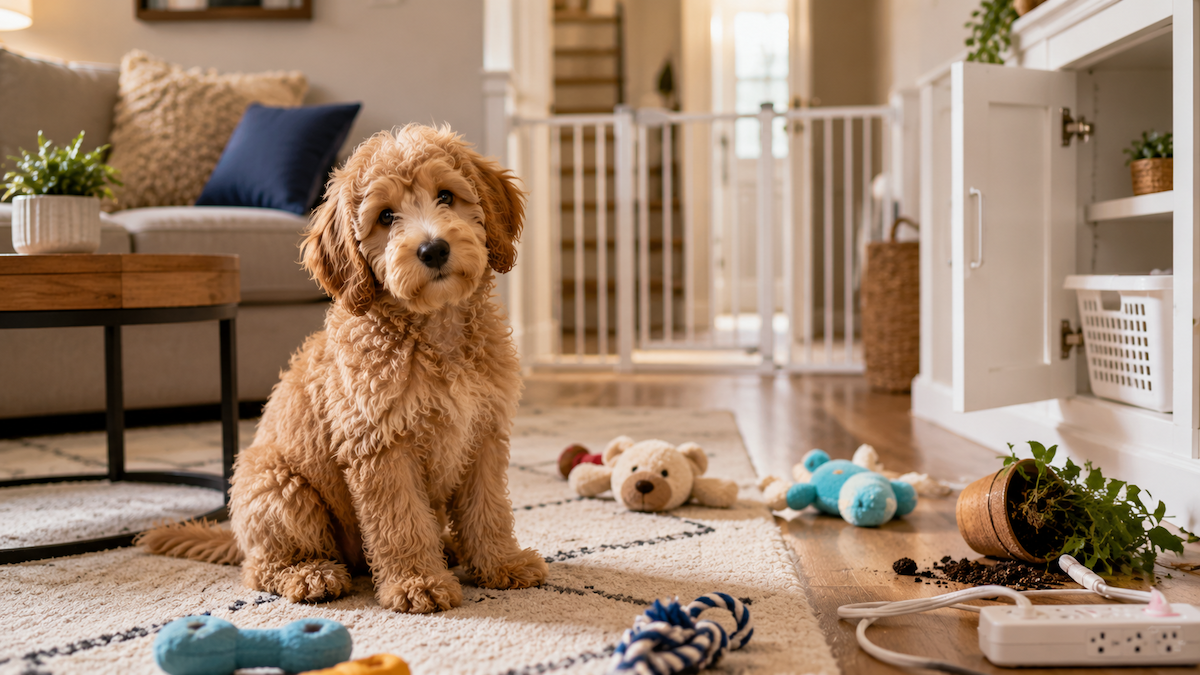
Bringing a Labradoodle puppy home is genuinely exciting, and it is also the beginning of a period where your home will be explored, tested, and occasionally chewed by a small animal with no concept of what is valuable, dangerous, or out of bounds. Labradoodle puppies are intelligent, curious, and full of energy, which makes them wonderful to be around and simultaneously very effective at finding the one thing in a room that they should not have.
Puppy-proofing before the puppy arrives is considerably easier than trying to retrofit safety measures once a curious Labradoodle is already exploring every corner of the house. Most of the preparation takes an afternoon and prevents the kind of incidents that end in emergency vet visits, destroyed property, or both.
Quick Answer: Puppy-proofing your home for a Labradoodle involves securing electrical cords, removing or relocating toxic plants and household chemicals, blocking access to stairs and rooms before the puppy has earned the run of the house, securing bins and low-level food storage, and preparing a safe, den-like space where the puppy can rest and decompress. Walk through each room at puppy height to see what a low-to-the-ground, mouth-first explorer would find.
Start at Floor Level
The most useful exercise in puppy-proofing is getting down to the puppy's height and looking around the room from that perspective. Things that are unremarkable from standing height become obvious hazards or temptations at floor level: electrical cords running along skirting boards, low shelves with interesting items, chair and table legs that invite chewing, and gaps behind appliances or furniture that a puppy will inevitably explore.
Electrical cords are one of the most serious hazards because chewing a live wire can cause severe burns, electrocution, or house fires. Tuck cords behind furniture, use cord management channels, or run them through protective tubing that makes them unappealing to chew. Power strips left on the floor are a particular concern.
Toxic Substances and Plants
Many common household items are toxic to dogs, and a significant number of popular houseplants fall into this category. Lilies, pothos, aloe vera, sago palms, peace lilies, and tulip bulbs are among the plants that can cause serious harm if chewed. Move plants to genuinely out-of-reach locations, which for a Labradoodle that will eventually be a medium to large dog means higher than you might initially think.
Household chemicals are equally important. Cleaning products, laundry detergent pods (which are particularly dangerous because of their concentrated formula and appealing appearance to a curious puppy), medications, and even certain foods like chocolate, grapes, raisins, and xylitol-containing products all need to be in secured cabinets rather than accessible low-level storage.
Kitchen and Bathroom Hazards
Kitchens contain multiple categories of hazard: food at counter level that a growing Labradoodle will eventually be able to reach, bin access that makes rubbish irresistible, cleaning products under the sink, and sharp objects in lower drawers. Fit childproof catches to under-sink cabinets before the puppy arrives. A bin with a secure lid or stored in a latched cupboard prevents the inevitable rummaging that unlatched bins invite.
Bathrooms have a surprising number of hazards for a curious puppy: medications on low counters, toilet bowl cleaners in the toilet, razors and cosmetic products within reach, and the toilet itself, which puppies sometimes drink from. Keep the bathroom door closed or use a baby gate as a matter of routine in the puppy's first months.
Stairs, Rooms, and Access Control
Labradoodle puppies should not have free rein of the entire house immediately. Stairs pose a fall risk for young puppies whose coordination is still developing. Rooms with specific hazards, valuable items, or that are simply too large to supervise effectively should be gated off until the puppy has been trained to respect the boundaries of the home.
Baby gates are one of the most practical puppy-proofing tools available. Pressure-mounted gates are quick to install and repositioned easily. For stair tops, a fixed-mount gate is the safer option. The goal is not permanent restriction but a managed introduction to the home that gives you time to train before the puppy has access to situations you cannot supervise.
Establishing clear boundaries from the beginning is easier when the physical environment supports the training. A puppy that is gated out of the kitchen from day one learns that the kitchen is not its space, which is a far simpler lesson than trying to reverse a habit the puppy has developed over months of free access.
Preparing a Safe Den Space
Every puppy needs a space that is specifically theirs: somewhere safe, quiet, and associated with rest rather than activity. This might be a crate, a pen, a bed in a low-traffic corner, or any dedicated area that the puppy can retreat to when tired or overwhelmed. The den is not a punishment space: it is the puppy's home base, and making it comfortable and positive from the beginning builds a healthy relationship with it.
Line the crate or pen with comfortable bedding and a piece of clothing that smells like you. Place it away from direct sunlight and high-traffic areas but not so isolated that the puppy feels excluded. Covering the top and three sides of a crate with a blanket makes it darker and more den-like, which many puppies find calming.
The first weeks with a new puppy are significantly smoother when the puppy has a space that is unambiguously its own and where the physical environment has been set up to prevent the incidents that create negative associations or physical harm.
Garden and Outdoor Safety
Before allowing your Labradoodle puppy into the garden, check the perimeter for gaps in fencing. Puppies are surprisingly good at finding and squeezing through small openings, and a Labradoodle that has escaped a fenced garden at eight weeks old can be extremely difficult to catch. Walk the fence line at ground level and block any gaps wider than a few inches.
Check the garden for toxic plants. Common garden plants including foxglove, hydrangea, rhododendron, sweet peas, and daffodil bulbs are toxic to dogs. Remove them or fence off the area where they grow before giving the puppy access. Also check for any slug or snail pellets, which are toxic to dogs and unfortunately palatable.
Chew-Proofing Your Furniture and Belongings
Labradoodle puppies chew. This is not a character flaw but a developmental reality: chewing relieves teething discomfort, explores texture and taste, and burns mental energy. The question is not whether your puppy will chew but whether it will chew appropriate items or inappropriate ones, which depends on how well you have managed the environment and provided good chewing alternatives.
Protect furniture legs with cord covers or furniture protectors during the teething phase. Keep shoes, children's toys, and remote controls off the floor and out of reach. Provide a good range of appropriate chews and toys, rotating them to maintain novelty. Supervise closely when the puppy is loose in any room and redirect chewing to appropriate items consistently.
Setting up a consistent daily routine from the beginning helps with chewing because a puppy that has appropriate exercise, play, and rest is less likely to chew out of boredom or excess energy.
Working on first-year training priorities alongside the physical puppy-proofing means that as the puppy grows and begins to earn more freedom, it has the foundational skills to handle that freedom responsibly.
Frequently Asked Questions
At what age can a Labradoodle puppy be trusted loose in the house?
There is no single age, but most Labradoodles begin earning more unsupervised freedom gradually from around six months onwards as house training becomes reliable and chewing becomes less indiscriminate. Full unsupervised freedom is typically appropriate only when the dog has demonstrated consistent reliable behaviour over several months.
Is a puppy pen or a crate better for a Labradoodle puppy?
Both have advantages. A crate is smaller, more den-like, and tends to support faster house training because dogs are reluctant to soil their sleeping area. A puppy pen provides more space and can accommodate a bed, a pee pad, and some toys, making it suitable for longer periods when the puppy cannot be supervised. Many owners use both at different times.
What household plants are toxic to Labradoodles?
A significant number of common houseplants are toxic to dogs, including pothos, peace lily, aloe vera, philodendron, dieffenbachia, and sago palm (which is particularly dangerous). Before bringing a puppy home, cross-reference all plants in your home against a comprehensive pet toxicity list from a veterinary source.
How do I stop my Labradoodle puppy from chewing furniture?
Consistent redirection to appropriate chew toys, management of the environment to limit access to preferred chewing targets, and ensuring the puppy has adequate physical exercise and mental stimulation are the most effective approaches. Bitter sprays applied to furniture can deter some puppies but are not universally effective.
Should I get a dog door before my Labradoodle arrives?
A dog door can be useful for garden access once the puppy is old enough and trained to use it appropriately, but it is generally not recommended from day one. Early house training is easier when you control when and how the puppy accesses the garden. Once house training is established, typically from around four to six months, a dog door becomes a practical addition.
The Bottom Line
Puppy-proofing your home before your Labradoodle arrives is one of the most practical investments you can make in a smooth first few months. A safe environment reduces accidents, supports training, and lets you focus on building the relationship with your puppy rather than constantly managing crises.
All About The Doodles covers every aspect of bringing a Labradoodle home and raising them well. Browse the articles section for guidance on training, routine, health, and everything else the first year involves.