
Is Crate Training Good for Labradoodles and How Do I Start?
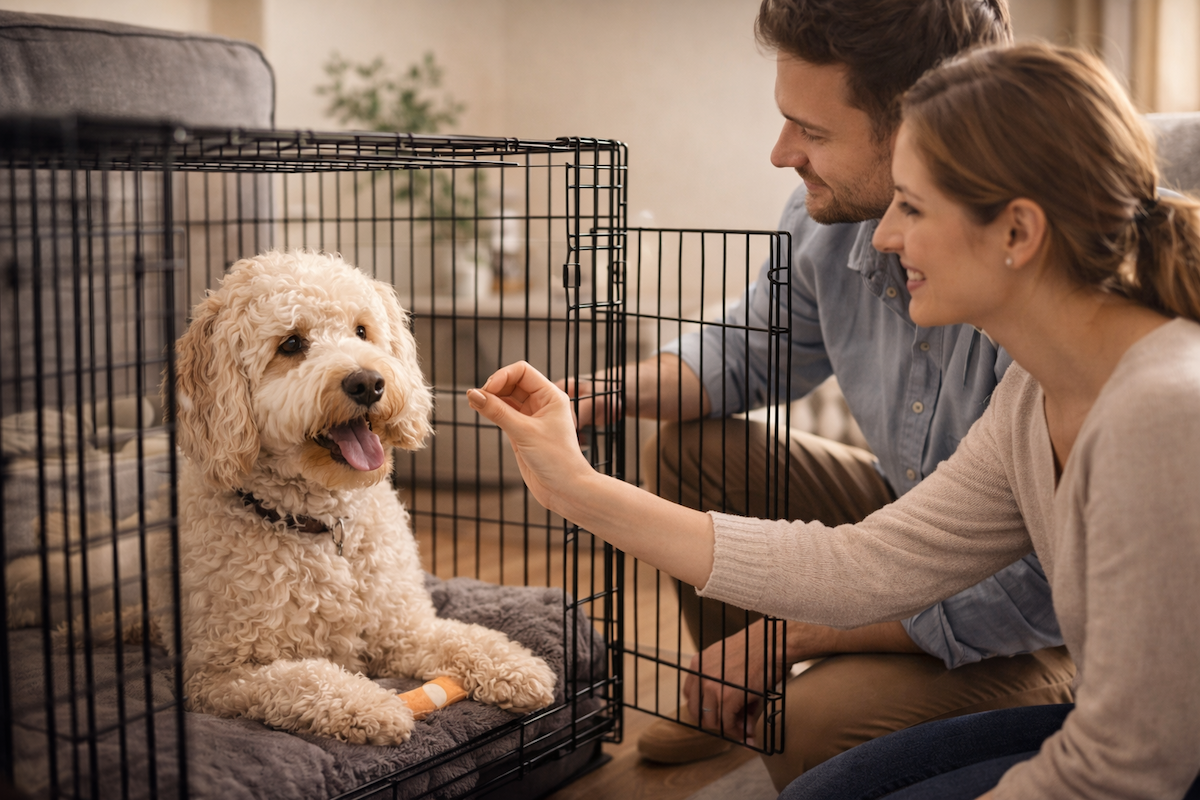
Labradoodles are energetic, intelligent, and affectionate dogs that thrive on structure and routine. Because they are highly trainable, many Labradoodle owners look for ways to create clear boundaries while also giving their dog a sense of comfort and security. One method that is widely recommended by trainers is crate training, which can help establish healthy habits from an early age.
Some dog owners hesitate when they first hear about crate training. They worry that placing a dog in a crate may feel restrictive or unfair. However, when introduced correctly, a crate does not feel like punishment to a dog. Instead, it becomes a quiet and safe place where the dog can relax, sleep, and retreat when they want to rest.
Quick Answer: Crate training is beneficial for Labradoodles because it provides a secure personal space, helps with house training, prevents destructive behavior, and supports a consistent routine. When introduced gradually using positive reinforcement, most Labradoodles quickly learn to view their crate as a comfortable and relaxing place.
Why Crate Training Works Well for Labradoodles
Labradoodles are known for their intelligence and eagerness to learn. As a cross between Labrador Retrievers and Poodles, they inherit strong problem solving abilities and a desire to please their owners. These traits make them excellent candidates for crate training.
Dogs naturally seek out den like spaces when they want to rest. In the wild, small enclosed areas provide safety and protection. A properly introduced crate can replicate this feeling for domestic dogs.
Because Labradoodles are active and curious, having a structured resting place can also help them settle down after playtime or exercise.
Crate training works especially well for Labradoodles because:
They respond well to consistent routines
They enjoy having a quiet space to relax
They learn quickly through positive reinforcement
They thrive in structured environments
When done correctly, crate training becomes a helpful part of daily life for both the dog and the owner.
Benefits of Crate Training for Labradoodles
Crate training offers several practical benefits that help Labradoodle owners manage their dog’s behavior and comfort.
Supports House Training
Dogs naturally avoid soiling their sleeping area. A crate encourages puppies to hold their bladder until they are taken outside.
Over time, this helps establish a reliable bathroom routine.
Prevents Destructive Behavior
Young Labradoodles can become mischievous when left alone with too much freedom. Chewing furniture, digging through trash, or tearing up household items are common issues.
Using a crate when supervision is not possible helps prevent these behaviors and keeps the dog safe.
Provides a Safe Resting Space
Just like people enjoy having a quiet place to relax, dogs also benefit from a personal resting area.
A crate can become a place where your Labradoodle goes voluntarily when they feel tired or overwhelmed.
Helps During Travel or Vet Visits
Dogs that are comfortable with crates often adapt better to travel. They also feel less stressed when placed in temporary enclosures at veterinary clinics or grooming appointments.
Choosing the Right Crate for Your Labradoodle
Selecting the right crate is an important first step. The crate should be large enough for your Labradoodle to:
Stand comfortably
Turn around easily
Lie down and stretch
However, the crate should not be excessively large, especially for puppies. Too much space may reduce the effectiveness of house training.
Common crate types include:
Wire crates
These offer good airflow and visibility and are often adjustable as the dog grows.
Plastic travel crates
These are enclosed on most sides and can create a den like atmosphere.
Soft sided crates
These are portable but usually better suited for calm, fully trained dogs.
Many Labradoodle owners prefer wire crates because they are durable and easy to clean.
How to Start Crate Training Your Labradoodle
Crate training should always be introduced gradually. The goal is to help your Labradoodle associate the crate with comfort and positive experiences.
Start by placing the crate in an area where the family spends time, such as the living room. This helps the dog feel included instead of isolated.
Then allow your Labradoodle to explore the crate on their own.
You can encourage curiosity by:
Placing treats inside the crate
Adding a favorite toy
Leaving the door open at first
Praising your dog when they enter the crate
Avoid forcing your dog into the crate. The process should feel natural and relaxed.
Once your Labradoodle is comfortable entering the crate, you can begin closing the door for short periods while remaining nearby.
Gradually increase the duration as your dog becomes more comfortable.
Creating a Positive Crate Experience
The success of crate training depends on making the crate feel like a safe and pleasant place. There are several ways to help your Labradoodle build a positive association with the crate. Add a comfortable bed or blanket inside the crate so the space feels cozy.
Provide chew toys or puzzle toys that keep your dog entertained. Offer treats or praise when your Labradoodle enters the crate voluntarily. Establish a consistent routine so your dog understands when it is time to rest.
Many Labradoodles eventually begin going into their crate on their own when they feel tired.
Common Mistakes to Avoid During Crate Training
While crate training is effective, certain mistakes can make the process more difficult.
Avoid using the crate as punishment. If the crate is associated with negative experiences, your dog may resist entering it.
Do not leave your Labradoodle in the crate for excessive periods. Dogs still need regular exercise, interaction, and mental stimulation.
Also avoid rushing the training process. Some dogs adjust quickly, while others need more time.
Patience and consistency are key.
How Long Can a Labradoodle Stay in a Crate
The amount of time a dog can remain comfortably in a crate depends on their age and energy level.
Puppies typically need more frequent breaks because they cannot hold their bladder as long.
As a general guideline:
Puppies under 6 months should not stay in a crate for more than 3 to 4 hours during the day
Adult Labradoodles can usually stay in a crate for about 4 to 6 hours if needed
However, dogs should always have plenty of opportunities for exercise and social interaction.
Frequently Asked Questions
Is crate training cruel for Labradoodles?
Crate training is not cruel when it is done correctly. In fact, many dogs learn to view their crate as a comfortable resting place. The key is to introduce the crate gradually and use positive reinforcement so the dog associates it with safety and relaxation.
At what age should I start crate training my Labradoodle?
Crate training can begin as soon as a Labradoodle puppy comes home. Early training helps establish routines and makes house training easier. Even older dogs can learn to enjoy a crate with patience and consistent training.
Should I cover my Labradoodle's crate at night?
Some dogs feel more relaxed when the crate is partially covered because it creates a den like environment. However, it is important to maintain good airflow and ensure the dog does not feel isolated.
What if my Labradoodle cries in the crate?
Some whining is normal during the early stages of crate training. Try to ensure your dog has had exercise, bathroom breaks, and comfort before entering the crate. Gradual training and positive experiences usually reduce whining over time.
Conclusion
Crate training can be one of the most useful tools for raising a well behaved Labradoodle. When introduced properly, a crate becomes more than just a training tool. It becomes a safe place where your dog can relax, sleep, and feel secure.
The key to successful crate training is patience and consistency. By introducing the crate gradually, using positive reinforcement, and maintaining a predictable routine, Labradoodles quickly learn that their crate is a comfortable and trusted space.
For Labradoodle owners looking to better understand their dog's needs, training, and behavior, All About The Doodles provides helpful guidance and practical tips to support a happy and healthy life with your doodle companion.