
How Do I Care for My Labradoodle in Hot Weather and Cold Winters?
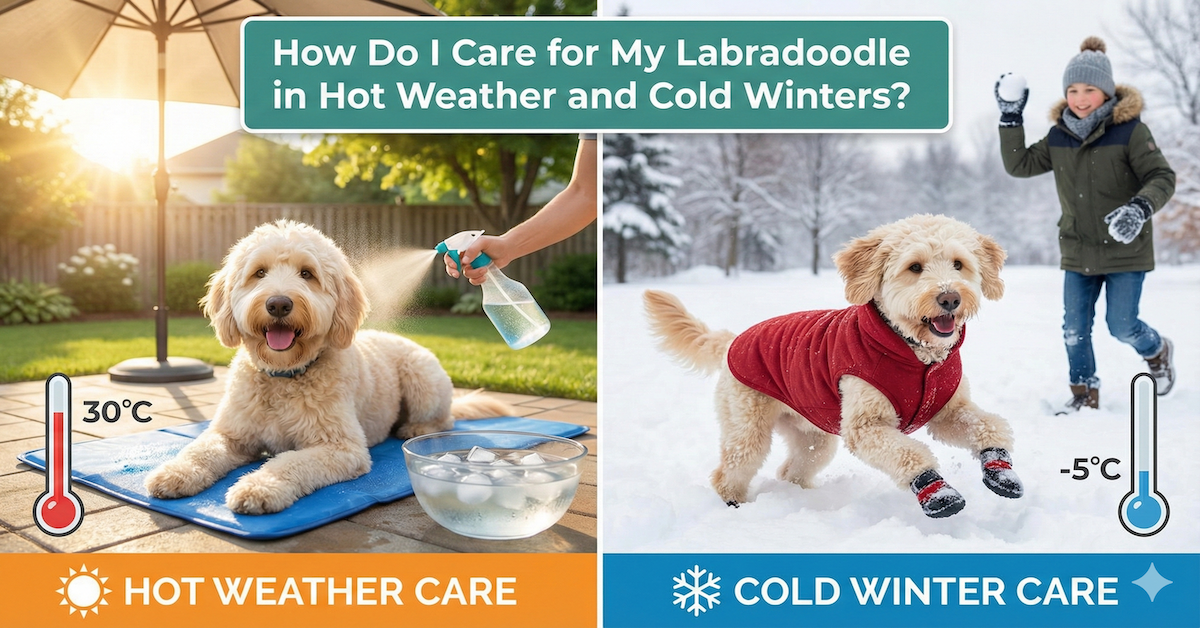
Labradoodles are known for their friendly nature, playful energy, and expressive personalities. They adapt well to many homes and lifestyles, but they do need thoughtful care throughout the year, especially when temperatures reach their extremes. Hot summers and cold winters can both affect your Labradoodle in different ways. Understanding how to adjust grooming, exercise, hydration, and overall routines helps your dog stay comfortable and healthy no matter the season. Once you know how your Labradoodle reacts to heat and cold, it becomes easier to support them in a way that feels natural and stress free.
Quick answer: To care for a Labradoodle in hot and cold weather, adjust grooming, maintain hydration, manage outdoor time safely, protect their coat, and watch for signs of temperature stress throughout the year.
How Labradoodles React to Seasonal Temperatures
Labradoodles come in different coat types, from curly to wavy to straight, and each responds to temperature changes differently. A thicker or curlier coat holds warmth, which becomes helpful in winter but can feel overwhelming during hot weather. A thinner or shorter coat offers some relief in summer but may not provide enough insulation in winter without extra support. These coat variations shape how your dog feels from season to season.
Labradoodles also tend to be active and curious. They may not slow down on their own during a hot afternoon or a freezing morning, so you need to help them find safe ways to enjoy the outdoors. Paying close attention to changes in their energy level, breathing, and behavior gives you early clues about how well they are handling the weather.
Caring for Your Labradoodle During Hot Weather
Summer brings long days and fun outdoor activities, but Labradoodles can overheat quickly if you do not adjust their routine. Their coat holds heat, and their excitement makes them push past their limits without realizing it.
Grooming for Warmer Months
In summer, a regular brushing routine keeps the coat light and airy. Brushing removes loose hair and improves airflow through the coat. Many owners choose a shorter trim for the season, but shaving too close can remove natural sun protection. A tidy trim is usually the safest approach. Keeping the coat clean and tangle free also helps your Labradoodle cool off more effectively.
Hydration and Cooling Support
Hydration becomes essential during hot months. Labradoodles lose moisture quickly through panting, so fresh water should always be available. Cooling mats, shaded areas in the yard, and indoor fans offer comfortable resting spots. On especially warm days, encourage your dog to relax indoors where temperatures remain stable.
Safe Summer Exercise
Outdoor activities should take place early in the morning or later in the evening when the heat is milder. Hot pavement can burn paw pads, so always check the ground with your hand before walking. Shorter, gentler outings work best in summer. If temperatures rise too high, choose indoor play or mental enrichment activities instead.
Signs of Heat Stress
Heat affects dogs quickly. Look for rapid panting, drooling, wobbliness, bright red gums, or sudden fatigue. These signs mean your Labradoodle needs immediate cooling and rest. Severe cases require emergency veterinary care, so it is important to stay alert.
Caring for Your Labradoodle During Cold Winters
Winter weather brings a completely different set of challenges. Labradoodles enjoy playing in the snow, but cold temperatures can cause discomfort without the right precautions.
Grooming and Coat Protection for Winter
Winter is not the time for very short trims. A slightly longer coat provides insulation from the cold. Regular brushing is still important because mats can trap moisture and increase the feeling of cold. A paw balm or protective wax helps guard against ice, salt, and rough surfaces.
Staying Warm Outdoors
Many Labradoodles benefit from a warm jacket during cold weather, especially those with thinner coats. Booties can protect paws from freezing pavement and prevent irritation from salted sidewalks. Outdoor time should be limited during extreme cold, and it is better to take shorter walks more frequently instead of long outings.
Winter Exercise and Safety
Cold days often reduce outdoor activity, so indoor play becomes useful. Puzzle toys, hide and seek games, and obedience practice help burn mental and physical energy. When you do go outside, choose safe pathways and avoid icy areas where slipping might injure your dog.
Signs of Cold Discomfort
Watch for shivering, paw lifting, curling into a tight position, or hesitation to continue walking. These are early signs of cold stress. Frostbite becomes a concern if skin looks pale or stiff. Bring your dog indoors right away if you notice these symptoms.
Helpful Grooming and Nutrition Adjustments for Each Season
Seasonal grooming keeps your Labradoodle comfortable and healthy year round. In summer, lighter trims paired with consistent brushing help the coat breathe. In winter, maintaining a slightly fuller coat provides insulation. Nutrition may change slightly based on activity level. Some Labradoodles drink more water and eat lighter meals in summer. During winter, active dogs might need a small increase in calories to stay warm and energized. Always make changes gradually and watch how your dog responds.
Creating a Comfortable Indoor Environment
Indoor comfort is just as important as outdoor care. In summer, cool spaces, fans, and access to water help prevent overheating. In winter, warm bedding, draft free resting areas, and soft blankets support cozy relaxation. Your Labradoodle will naturally gravitate toward comfortable spots, but providing options helps them regulate their body temperature more easily.
Conclusion
Seasonal care for a Labradoodle comes down to understanding how temperature affects their body and behavior. Thoughtful grooming, safe outdoor routines, hydration, and small adjustments in daily habits help your dog stay healthy in both hot summers and cold winters. Once you recognize your Labradoodle’s unique needs, seasonal changes become much easier to manage.
For more guidance on raising a happy, healthy Labradoodle, All About The Doodles offers helpful insights, expert care tips, and community support for owners who want the very best for their dogs.