
Do Labradoodles Shed and Are They Really Hypoallergenic?
Labradoodles are loved for their soft coats, playful energy, and gentle personalities. Many families choose them because they are often described as low shedding and allergy friendly. While this reputation is partly true, shedding and allergies are more complex than they first seem. Understanding coat types, grooming needs, and how allergens work helps set the right expectations before bringing a Labradoodle home.
Because Labradoodles come from both Labrador Retrievers and Poodles, their coat traits can vary widely from dog to dog. This variation affects how much they shed and how well they fit into homes with allergy concerns. Learning these differences helps you choose the right type of Labradoodle for your household and create an environment that supports their coat health.
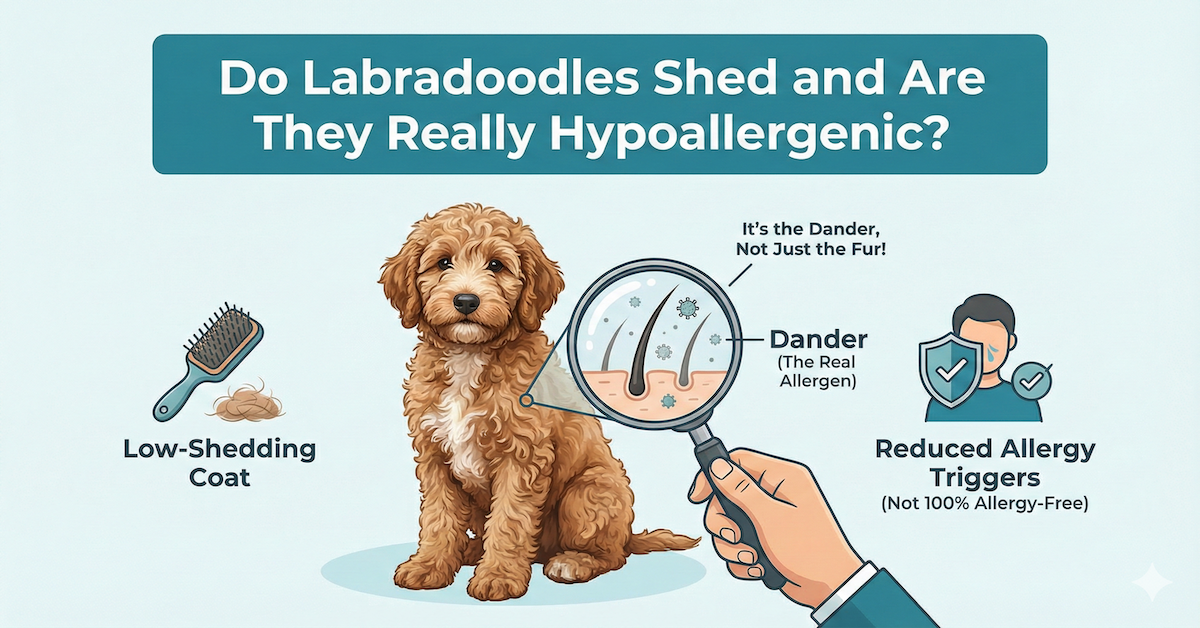
Quick answer: Most Labradoodles shed lightly to moderately depending on coat type, and while many are allergy friendly, no dog is completely hypoallergenic.
How Coat Types Affect Shedding in Labradoodles
Labradoodle coats can be wool, fleece, or hair. Each one behaves differently when it comes to shedding. Wool and fleece coats tend to shed less and produce fewer loose hairs around the home. Hair coats shed more often and resemble the shedding pattern of a regular Labrador Retriever. These coat differences exist because of the mix of genetics from both parent breeds.
Even within the same litter, two Labradoodles can have different coats, which is why understanding the coat type before adoption helps owners prepare for grooming needs and possible allergy concerns. Regular brushing and grooming play a major role in managing how much shedding you see, no matter which coat type your Labradoodle has.
Why No Dog Is Completely Hypoallergenic
Many people assume a dog that sheds less will not trigger allergies, but allergies are usually caused by dander and saliva proteins, not just loose hair. Labradoodles produce fewer airborne hairs, which helps reduce allergens in the home, but they still release dander naturally. Their coats can trap some of the dander, which means proper grooming is needed to prevent buildup that may affect sensitive owners.
A Labradoodle may be a better option for allergy sufferers than many other breeds, but it is important to remember that each person reacts differently. Some people adjust well to a Labradoodle with a wool or fleece coat, while others may still experience sensitivity.
How Grooming and Care Influence Shedding and Allergens
Grooming plays a major role in how manageable shedding becomes. Regular brushing removes loose hairs before they fall off naturally. It also prevents mats, which can trap shed hair and increase dander buildup. Professional grooming every six to eight weeks helps maintain coat health and reduces shedding further.
Bathing with a gentle dog shampoo helps reduce allergens on the coat, but overbathing can dry out the skin. Finding the right balance keeps the coat clean without stripping away natural oils. A healthy diet also impacts shedding, as high quality food supports skin health and reduces flakiness.
Why Some Labradoodles Seem More Allergy Friendly Than Others
Breeding plays a major role in allergy friendliness. Labradoodles labeled F1B or multigenerational often have stronger Poodle genetics, which means their coats may be curlier and less prone to shedding. F1 Labradoodles, which are a direct mix of Labrador and Poodle, can be more unpredictable when it comes to shedding levels.
Environmental factors also matter. Homes with air purifiers, regular cleaning routines, and frequent grooming tend to see fewer allergy issues. Taking small steps consistently helps make a noticeable difference.
Helpful Tips for Reducing Allergens in the Home
Small routine changes can greatly reduce allergens. Washing bedding weekly removes dander that builds up where your Labradoodle sleeps. Vacuuming with a pet friendly machine helps control shed hair on floors and furniture. Using air purifiers improves air quality, especially in shared living spaces.
Some owners designate certain areas as dog free zones, such as bedrooms. This creates a space with fewer allergens and helps sensitive owners manage their symptoms better. These small habits add up and create a home environment that is more comfortable for everyone.
How to Test for Allergies Before Bringing a Labradoodle Home
Spending time with similar coat types is one of the best ways to understand how someone may react. Meeting adult Labradoodles from the same breeder helps set realistic expectations because puppy coats often change as they grow. Spending an hour or more with the dog in a closed space is more effective than a quick visit outdoors.
If allergies are a concern, consulting an allergist can help determine sensitivity levels to dog proteins. Some people discover that regular grooming and air filtration allow them to enjoy life with a Labradoodle comfortably.
Conclusion
Labradoodles shed less than many breeds, but shedding levels vary depending on their coat type and genetics. While many Labradoodles are allergy friendly, no dog is entirely hypoallergenic. With good grooming habits, a clean environment, and a proper understanding of your dog’s coat, you can significantly reduce shedding and allergens in the home. These small steps make caring for a Labradoodle easier and help you enjoy a healthier, more comfortable life with your dog.
If you want to learn more about how Labradoodles shed, how to choose the right coat type, or how to manage allergies at home, All About The Doodles offers supportive guides, grooming advice, and community insights for new and experienced owners. Our goal is to help you build a home where both you and your Labradoodle can live comfortably. With practical tips and helpful resources, we make it easier to understand your dog’s needs and create a space where they can thrive.