
How Can I Improve My Labradoodle’s Separation Anxiety?
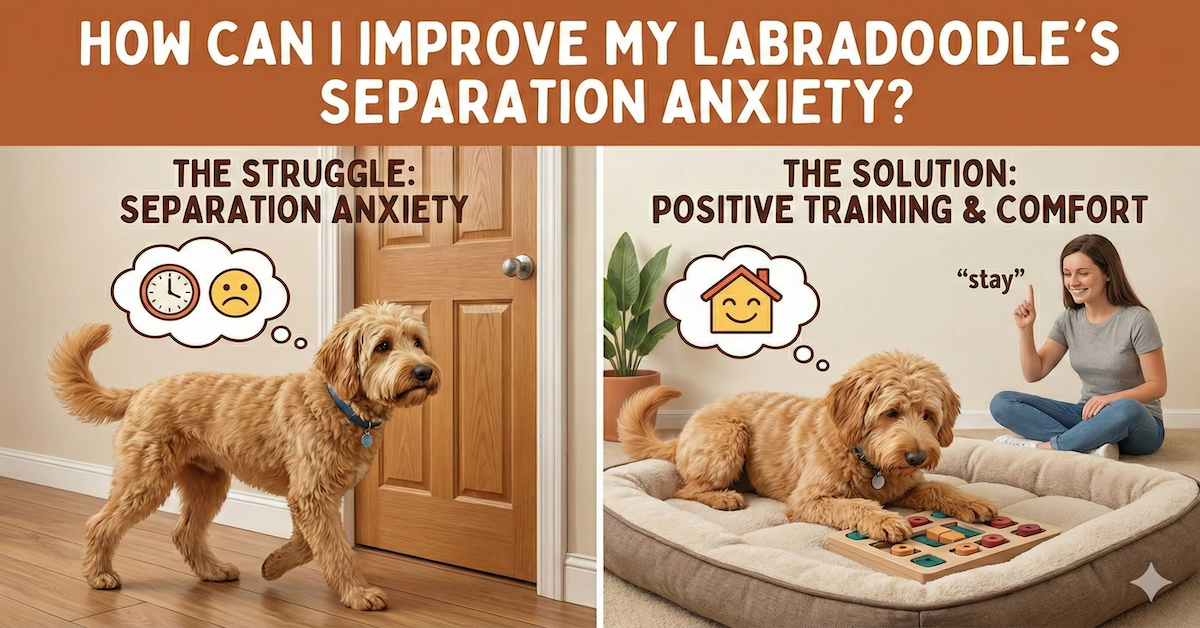
Labradoodles are known for their warm personalities and strong desire to stay close to their families. Their friendly temperament is one of the reasons people love them, but this same attachment can sometimes lead to separation anxiety. When a Labradoodle becomes distressed about being alone, it can affect their behavior, mood, and overall well being. Separation anxiety can develop at any age, and it often shows up as barking, whining, pacing, chewing, or attempts to follow the owner out the door.
Understanding what triggers separation anxiety helps you create the right plan to support your dog. Labradoodles are intelligent, expressive, and sensitive, which means they tend to react strongly to changes in routine or long periods without interaction. The good news is that separation anxiety is manageable. With patience and consistency, most Labradoodles learn to feel calmer and more confident when left alone.
Quick answer: You can improve your Labradoodle’s separation anxiety by gradually training them to tolerate alone time, creating a predictable routine, offering mental stimulation, building independence, and seeking professional guidance when needed. A combination of training, enrichment, and calm leadership helps reduce stress and builds confidence.
Why Labradoodles Struggle With Being Alone
Labradoodles are bred from two affectionate, loyal breeds. Both Poodles and Labrador Retrievers bond closely with their families. This genetic tendency to stay near their people makes Labradoodles quick to notice changes in routine or signals that suggest someone is leaving. Their intelligence also plays a role. Because they learn patterns quickly, they may anticipate the moment you grab your keys or put on your shoes, and this anticipation can trigger anxiety.
Another factor is the amount of attention Labradoodles usually receive. Families often include them in daily activities, which strengthens the bond but reduces opportunities for the dog to practice independence. When alone time becomes unfamiliar, anxiety can develop easily.
Recognizing Signs of Separation Anxiety Early
Before working on solutions, it helps to understand what separation anxiety looks like. Some Labradoodles show mild signs, such as pacing, whining, or waiting anxiously by the door. Others may show stronger behaviors, like scratching at doors, chewing household items, or barking continuously.
Some dogs also experience physical stress responses, including drooling, panting, or trembling. These signs usually appear only when the dog is left alone or when the owner is preparing to leave. Recognizing the symptoms early helps prevent the anxiety from escalating into more destructive patterns.
How Training Builds Confidence and Reduces Anxiety
Training is the foundation of managing separation anxiety. The goal is to help your Labradoodle understand that being alone is safe, temporary, and part of a normal routine. One of the most effective methods is gradual desensitization. This involves practicing very short departures and slowly extending the time. For example, you might start by stepping outside for a minute, returning calmly, and rewarding your Labradoodle when they remain relaxed. As they build confidence, these short practices become longer and more natural.
Teaching independence during the day is equally important. Encourage your Labradoodle to rest in their bed or another room for short periods while you're home. This helps them learn that calm, quiet moments away from you are normal. Rewarding these moments reinforces the idea that relaxing on their own leads to positive experiences.
Another helpful technique is teaching a focus cue, such as “watch me” or “settle.” These cues help redirect your dog’s attention and promote calmness, especially during moments when they sense you’re preparing to leave.
Creating a Calming Environment Before You Leave
A Labradoodle with separation anxiety often benefits from having a structured and comforting environment. Many dogs feel safer when they have a predictable routine. Setting a schedule for feeding, walks, playtime, and rest helps them understand what to expect each day. When a routine is steady, moments of alone time feel less surprising.
Mental stimulation is another powerful tool. Puzzle toys, slow feeders, chew treats, and interactive toys keep your Labradoodle focused and satisfied. A busy mind means less time to worry. Providing these items shortly before you leave helps create a positive association with alone time.
For some dogs, background noise helps create a sense of security. Soft music, calming sounds, or even the television can make the home feel less empty. The goal is not to distract but to create an environment that feels familiar.
A cozy, dedicated resting area is also helpful. Whether it’s a crate, a gated room, or a comfortable corner with their bed, having a safe space gives your Labradoodle a sense of stability. Many dogs relax better when they have a designated area to claim as their own.
Lifestyle Habits That Support Emotional Stability
Exercise plays a big role in managing anxiety. Labradoodles are energetic dogs, and when they have too much unused energy, stress increases. Taking your dog for a walk or engaging them in a quick play session before leaving can help them settle more easily. Physical activity releases tension and allows the mind to relax.
Consistent social interaction also helps. Labradoodles thrive when they receive balanced affection and structure. Overindulging with constant attention can accidentally make anxiety worse, while a steady, predictable routine teaches independence.
It also helps to keep departures and arrivals calm. If you make a dramatic exit or greet your dog with too much excitement, these moments feel emotionally charged. Staying relaxed helps your dog understand that leaving and returning are normal parts of the day.
When to Seek Extra Support
Some Labradoodles experience severe separation anxiety that requires additional help. If your dog shows extreme panic, destructive behavior, or signs of physical distress, a veterinarian or professional trainer can provide guidance. A certified behavior specialist can create a structured plan tailored to your dog’s needs. In some cases, a veterinarian may recommend temporary medication or calming supplements alongside training.
Professional support is not a sign of failure. It simply provides the tools your Labradoodle needs to overcome stronger forms of anxiety.
Conclusion
Separation anxiety can be challenging, but with patience and the right approach, your Labradoodle can learn to feel calm and secure when left alone. Building independence through training, creating a soothing environment, maintaining a steady routine, and using mental enrichment all help reduce stress. Over time, your dog becomes more confident and balanced, making life easier for both of you.
All About The Doodles is here to support Labradoodle owners with guidance, care tips, and resources that help dogs live happier, more confident lives. With the right tools, your Labradoodle can overcome separation anxiety and feel comfortable no matter the routine.