
How Can I Strengthen My Labradoodle's Recall Training?
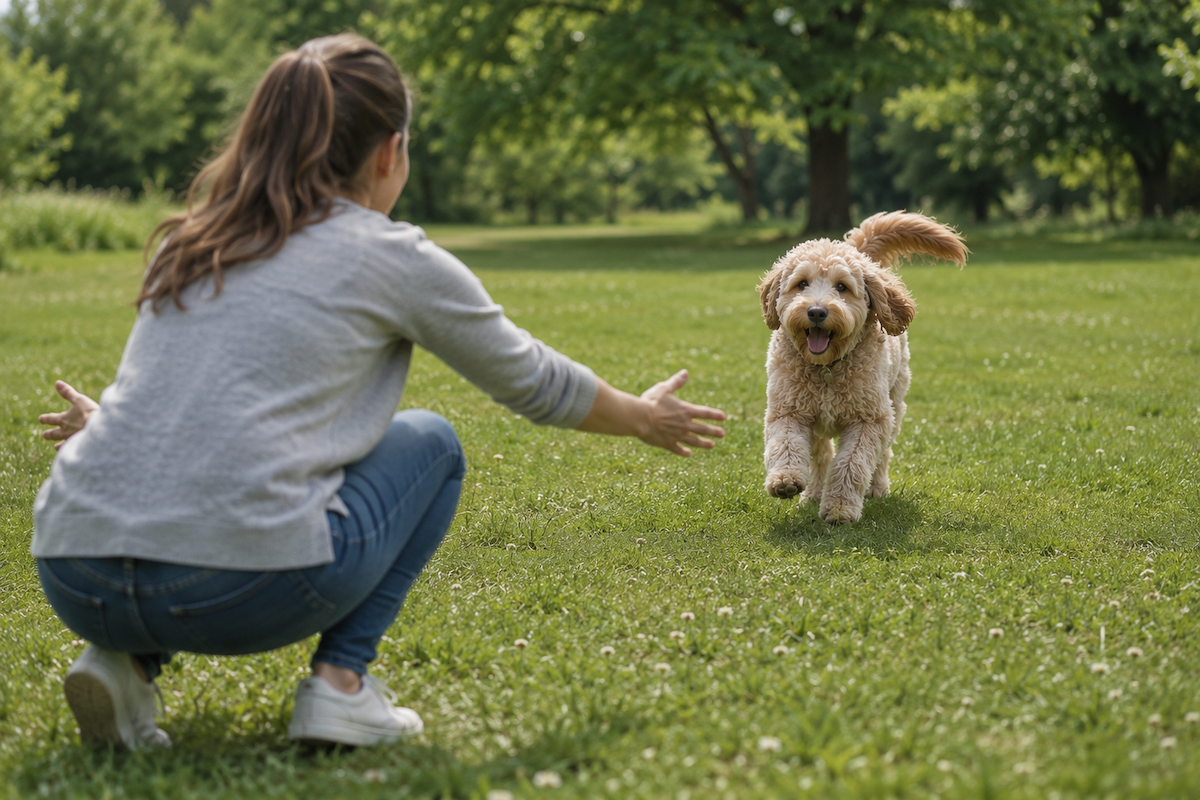
A Labradoodle that comes back reliably when called is a joy to own. Off-lead walks feel genuinely relaxed rather than tense. Dog parks become a pleasure rather than a source of anxiety. And in genuinely dangerous situations, such as a dog heading toward a road or approaching an unfriendly dog, the recall command can prevent a crisis. It is not an exaggeration to say that a solid recall might be the most important thing you ever teach your Labradoodle.
The challenge is that recall is also one of the easiest commands to undermine through inconsistent practice, accidental punishment, or simply not proofing it against the distractions of the real world. A Labradoodle that comes every time in the garden but ignores the command the moment something more interesting is happening is not a trained recall. It is a polite suggestion that gets ignored when it matters most.
Quick Answer: Strengthening your Labradoodle's recall involves three things: building the strongest possible positive association with the recall cue, practicing consistently across varied environments with increasing levels of distraction, and never using the recall command to end something the dog finds enjoyable. A reliable recall is built over months of deliberate practice, not occasional reminders.
The Foundation: Making Coming to You the Best Thing That Can Happen
Every recall training programme that works is built on the same principle: coming to you must be genuinely rewarding, every single time. Not just rewarding sometimes, or rewarding when you happen to have a treat in your hand. Rewarding every time, with something your specific Labradoodle finds genuinely exciting, whether that is their absolute favourite treat, a brief tug game, or an enthusiastic celebration.
This consistent reward structure is at the heart of positive reinforcement training, which is by far the most effective approach for recall work. Punishment-based recall training, where returning slowly or not at all leads to correction, teaches dogs that coming to you is a gamble rather than a guaranteed positive outcome.
Start in the lowest distraction environment you have: inside your home or in a secure garden with no competing stimuli. Use a dedicated recall cue, typically the dog's name followed by 'come' or a single distinct word, and make that word mean only one thing: sprint to me and something amazing happens. Never use your recall word and then do something the dog dislikes, such as bathing, nail trimming, or ending an enjoyable play session.
The Long Line: The Most Underused Recall Training Tool
A long line, typically a lightweight 10 to 15 metre lead, is the single best piece of equipment for building recall in real-world environments before you can fully trust the off-lead response. It allows your dog to experience distance and distractions while you maintain the ability to gently guide them back if they do not respond to the recall cue.
The key to using a long line correctly is that it is never yanked or used punitively. It is simply there as a safety net. If your dog does not respond to the recall, you calmly walk toward them along the line, take them back to the starting point, and try again with a shorter distance or fewer distractions. Over many sessions, the dog learns that the recall cue always results in something wonderful happening when they come to you.
Long line practice in parks, open fields, and other genuinely distracting environments builds the neural pathways that allow a dog to override their interest in whatever has caught their attention and choose to return instead. This is the work that a garden recall cannot replicate, and it is the work most owners skip.
Proofing Against Distractions
Proofing means systematically exposing the recall to distractions and gradually increasing the challenge until the dog responds reliably regardless of what is happening around them. This is not a one-time process but an ongoing one, because new environments and new distractions will always need to be added to the dog's experience.
Start each new environment or distraction level as if you are teaching the recall from scratch: shorter distances, higher value rewards, more frequent practice. If you try a recall in a new environment and the dog does not respond, the distractions are too high for the current training stage. Go closer, reduce the competing stimulus, and build success before increasing the challenge again.
The obedience training fundamentals that underpin all command work apply directly here: short sessions, high rates of reinforcement, and ending on success rather than frustration.
Common Recall Training Mistakes
Many owners who struggle with recall are unintentionally confusing their dog in specific ways that undermine the training without realising it.
The most common mistake is using the recall cue repetitively when the dog is not responding. Saying 'come, come, COME' teaches the dog that the recall word is just noise and can safely be ignored until the owner gets louder. If your dog does not respond to the first cue, do not repeat it. Instead, make yourself more interesting by crouching down, running in the opposite direction, or making happy noises that invite the dog to chase you.
Another common mistake is calling the dog to you only when the fun is over. If every recall in the park results in the lead being clipped on and the walk ending, the dog quickly learns that coming to you is the thing that stops the enjoyable activity. Practise recalls throughout the walk, reward generously, then release the dog back to play. Coming to you becomes just a brief interruption to the fun rather than the end of it.
Using recall to do something the dog finds unpleasant, such as bathing, ending their time with other dogs, or administering medication, also erodes the command. Keep a separate set of management words for those situations rather than using the recall cue.
Building a Recall That Holds Under Pressure
The goal is a recall that works when a squirrel crosses the path, when another dog is playing nearby, and even when your Labradoodle is mid-sprint in the other direction. Getting there requires months of consistent work and a genuine understanding of key training principles that keep the dog wanting to engage rather than simply complying out of fear.
Clear boundaries and consistent expectations around the recall contribute to overall reliability. A dog that understands clear boundaries in their home environment tends to be more responsive to training cues in general, because the relationship between owner and dog is built on mutual trust and clear communication.
Good socialization also plays a role in recall reliability. A well-socialised Labradoodle is less likely to be overwhelmed or distracted by the presence of other dogs and people, which makes recalls in those situations considerably more achievable.
Frequently Asked Questions
At what age should I start recall training with my Labradoodle?
From the day your puppy arrives home. Very young puppies have a natural following instinct and tend to want to stay near their owner. Capturing this natural behaviour with a recall cue from the beginning builds the association before the adolescent independence phase makes it harder.
My Labradoodle used to have reliable recall but has started ignoring the command. What happened?
This is very common during adolescence, typically between 7 and 18 months, when hormonal changes and growing independence can temporarily override trained behaviours. Go back to basics with shorter distances and higher value rewards. The training is still there; it just needs reinforcing during this phase.
Should I use a specific recall word or just the dog's name?
Many trainers recommend using a specific recall word separate from the dog's name, because the name is used so frequently in daily life that it can lose its signalling power. A distinct word used only for recall, reinforced only with excellent rewards, maintains its value much better over time.
How do I recall my Labradoodle from playing with other dogs?
This is genuinely one of the hardest recalls to train because dog-to-dog play is extremely reinforcing. Practice recall away from other dogs first, building the strongest possible association with coming to you. Then very gradually introduce the distraction of other dogs at a distance where your dog can still respond, rewarding magnificently when they do.
Is there anything that can speed up recall training?
Using the highest possible value rewards consistently, keeping sessions very short and very positive, and practicing in genuinely varied environments regularly are the biggest accelerators. Recall training that happens only in the garden plateaus quickly because the dog has never had to choose between coming to you and something more interesting.
The Bottom Line
A reliable recall is built through consistent, positive training across varied environments over months rather than weeks. The investment is absolutely worth it: a Labradoodle that comes back when called is safer, easier to manage, and more enjoyable to take anywhere.
All About The Doodles is a trusted resource for Labradoodle owners at every stage of training. Browse the articles section for more guidance on building the obedience skills that make life with a Labradoodle genuinely wonderful.